
THE CHARACTER ROOM · IMMERSIVE PERFORMANCE
Be the reason the room changes.
An immersive character doesn’t just look interesting. They create moments that guests can choose to become part of.
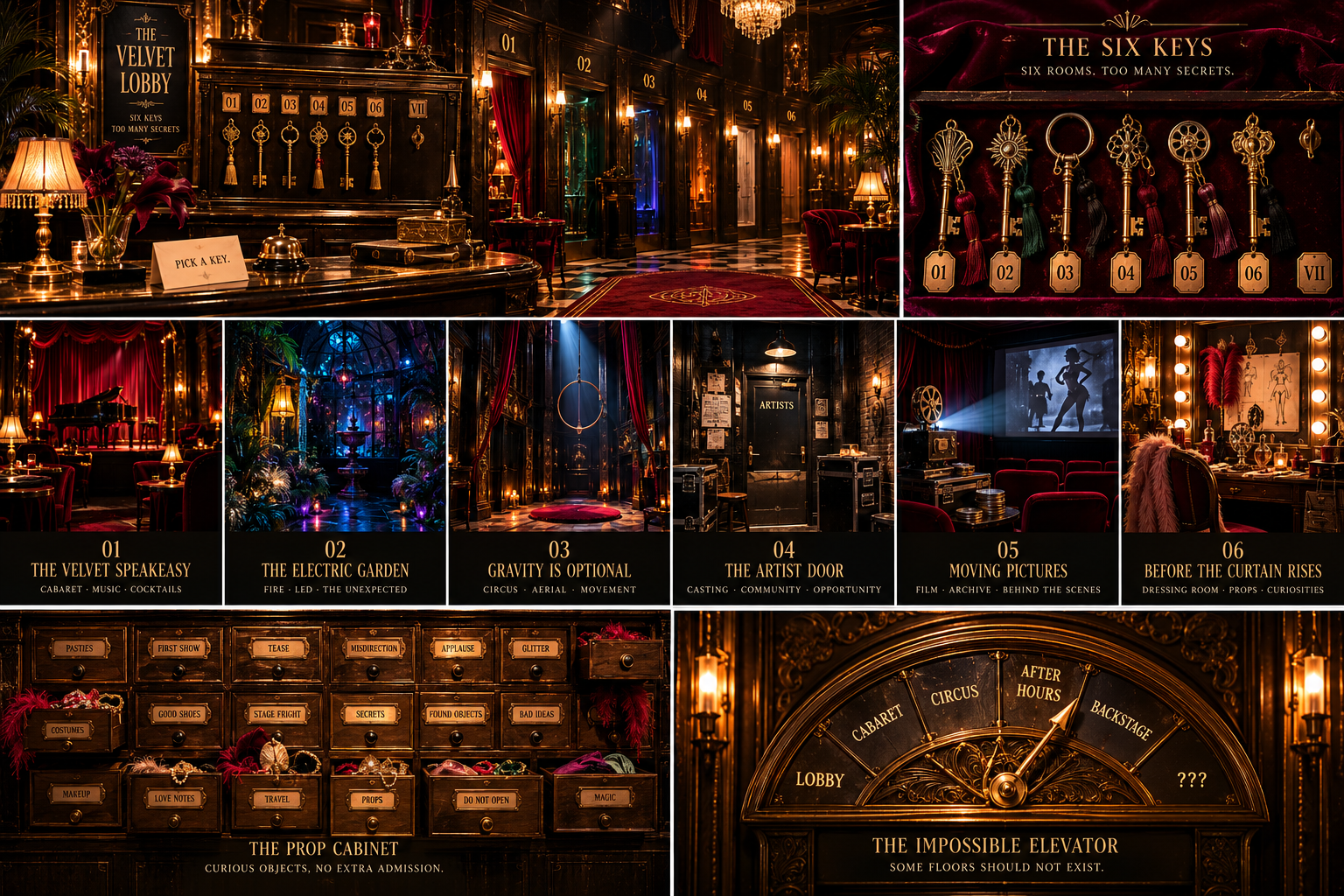
Build for the experience, not just the costume.
A visually arresting performer can become a strong immersive artist when they can give guests a reason to approach, a graceful way to leave, and a moment that feels intentional. The aim is not to pressure an audience into participating; it’s to make participation irresistible and optional.
The six-beat character blueprint
01 · The promise
In one sentence: who is this person and what do they offer the guest? A concierge guarding a key, a glamorous singer with a secret, a silent courier bearing a clue.
02 · The visual signal
What communicates the character from across a room? Costume silhouette, a prop, a posture or one recognizable behavior. Design for venue visibility and practical movement.
03 · The invitation
Give guests a low-pressure invitation to observe or interact. Think a question, an object, a meaningful choice or an amusing task—not a forced performance.
04 · The exchange
Create a memorable ten- to thirty-second interaction with a beginning, response and payoff. Rehearse possible guest reactions without making the dialogue feel robotic.
05 · The release
Know how to end gracefully: a gesture, a small reward, a new direction or a transition to another scene. Respect anyone who prefers to remain an observer.
06 · The reset
How does the character repeat consistently for the next guests, stay aligned with cues and seek support from the show caller when something unexpected happens?
Test the character before the live event
Use a quiet rehearsal to check movement, timing, the costuming needed to stay in character, guest accessibility, boundaries and performance stamina. If an interactive performer can’t be heard or is obstructing service, the character needs adjustment—not louder improvisation.
Character card: Name / role · Desire · Secret · Prop or visual signal · Invitation to guests · Three possible guest responses · Graceful opt-out · Closing beat · Costume and mobility needs · Cue from show caller · Reset.
Make the character part of an event-wide story
A bellhop, hostess or cabaret emcee becomes more powerful when they’re connected to other performers, a musical cue, a mysterious object or the evening’s featured show. Every cast member needs an understandable role in the guest journey, from arrival to finale.
See how immersive theater and experiential entertainment differ and explore how Vaudezilla produces original experiences.
Know your boundaries
A strong character is not license to touch guests without consent, insist on participation, block access routes, improvise unsafe stunts or reveal another person’s private information. Inclusive interactions give guests a choice and treat declined participation as perfectly normal.