Tease and reveal are related but not identical. Tease creates expectation. Reveal changes what the audience knows or sees. Burlesque becomes interesting when the performer controls the distance between those two moments.
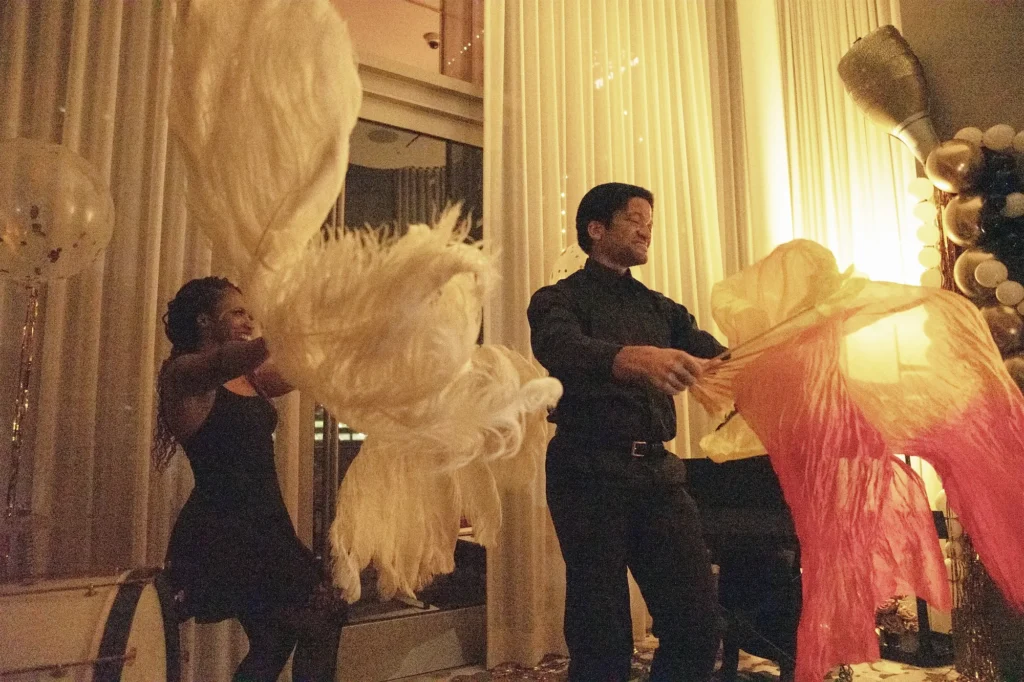

Tease is attention management
Tease can involve costume, but it can also come from gaze, timing, gesture, distance, comedy, props or deliberately delaying the moment an audience expects.
A reveal does not have to mean nudity
A reveal can expose a costume layer, a joke, a prop, a new character intention, an unexpected skill or simply a new visual image. Striptease is part of many burlesque traditions, but revelation is a broader theatrical tool.
Anticipation makes the payoff stronger
If the audience has no reason to expect something, the reveal may register only as a costume change. Building anticipation teaches the room that a particular moment matters.
Comedy can interrupt the expected reveal
Burlesque often gets its humor from promising one thing and delivering another. A performer can delay, exaggerate, reverse or deliberately undercut expectation.
Where does reveal fit in an act?
That depends on the act’s structure. A reveal can escalate the piece, change its direction or become the final payoff. See burlesque act structure and burlesque musicality for the surrounding craft.
If you want to practice tease, timing and reveals with feedback rather than only read about them, continue to Red Hot Annie.