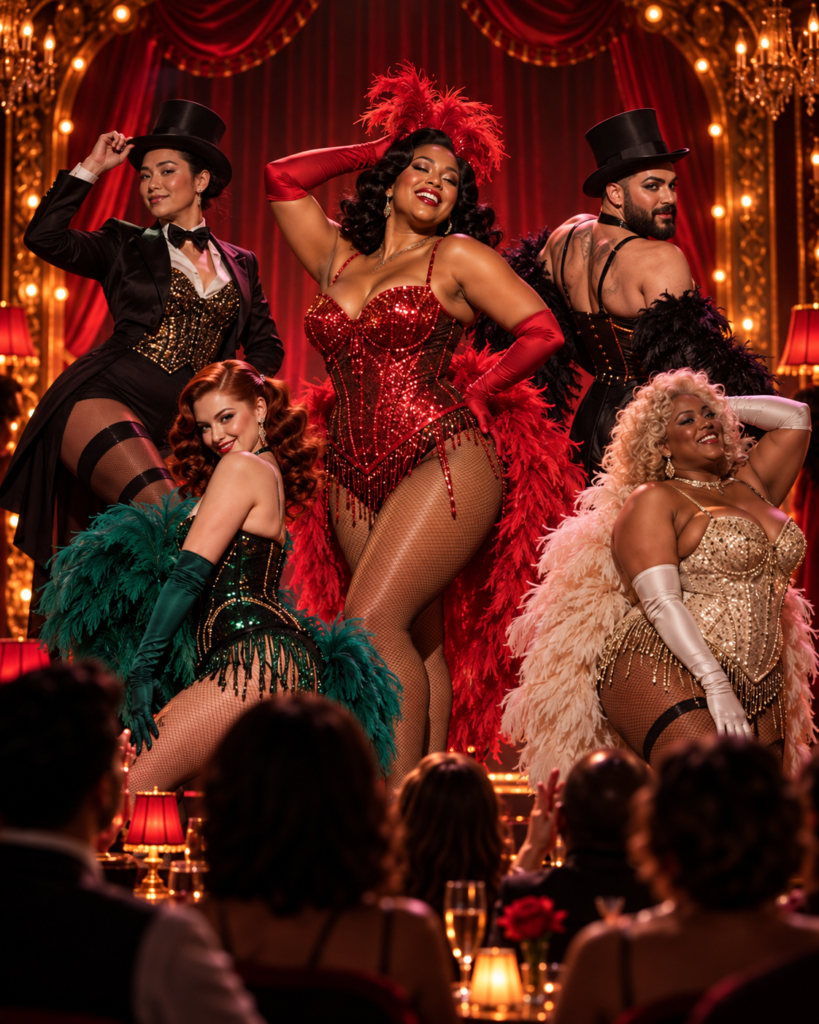
Burlesque and drag are often presented in the same nightlife spaces, and many shows include both. They can share glamour, theatricality, humor, costume, music and a love of transformation—but they are not the same performance form.
Burlesque vs. drag: the short answer
Burlesque is a performance tradition built around theatrical tease, character, humor, dance, storytelling and reveal. Drag is a performance tradition centered on the creation and presentation of a heightened gendered persona, often through lip-sync, live performance, comedy, hosting, dance or theatrical character work.
A performer can do both. A single act can borrow from both. A cabaret can feature both. The distinction is about the form and the performance language, not about putting artists into rigid boxes.
What Is the Difference Between Drag and Burlesque?
The difference between drag and burlesque is not simply costume, gender, glamour or whether clothing comes off. Burlesque is organized around tease, reveal, theatrical construction and audience attention; drag is organized around a performed persona and an intentional relationship to gender presentation. Either form can use comedy, dance, lip-sync, live vocals, costume or storytelling, and the same artist may work in both.
Both forms can also appear inside a cabaret. If you are comparing the larger formats, read Burlesque vs. Cabaret and What Is Cabaret?.
What makes a performance burlesque?
Modern burlesque usually revolves around a deliberately constructed act: a musical choice, a costume, a character or point of view, and a progression of reveals. Striptease is common, but burlesque is broader than simply removing clothing. Timing, comedy, choreography, audience awareness and theatrical payoff are central to the form.
If you are new to the form, start with our first-timer’s guide to a burlesque show or explore the history of burlesque.
What makes a performance drag?
Drag performance is built around a performed persona and an intentional relationship to gender presentation. That can mean drag queens, drag kings, nonbinary drag artists and performers whose work resists a simple category. Drag may include lip-sync, live vocals, dance, comedy, hosting, impersonation, character work or theatrical storytelling.
Where burlesque and drag overlap
The overlap is substantial. Both forms often use costume, makeup, camp, parody, sensuality, choreography, persona, audience interaction and exaggerated theatrical choices. Both have strong traditions of reinvention and outsider performance culture.
That is why a Chicago variety show may move naturally from burlesque to drag to circus to cabaret without the evening feeling disconnected.
Is burlesque the same as stripping?
No. Striptease can be part of burlesque, but burlesque is a theatrical performance form with its own history, conventions and artistic traditions. Likewise, drag is not defined by stripping. The three can overlap, but they describe different things.
For a deeper comparison of related forms, see burlesque vs. cabaret.
Can a drag performer also be a burlesque performer?
Absolutely. Many artists work across forms. A drag artist may create a burlesque act. A burlesque performer may use drag techniques, gender transformation or lip-sync. What matters is the structure and intention of the specific performance.
What will I see at a Chicago show?
Chicago’s live-performance scene frequently mixes genres. Depending on the production, one evening can include burlesque, drag, cabaret, circus, comedy, live music and immersive performance. If you care more about choosing a great night than choosing a label, use our guide to burlesque shows in Chicago and our comparison of the best burlesque shows in Chicago.
The simplest way to remember the difference
Burlesque is primarily a performance form built around tease, reveal and theatrical act construction. Drag is primarily a performance form built around a heightened gendered persona. They often share stages, techniques and audiences—and some of the most interesting performers deliberately move between both.