In burlesque, a costume is not finished when it looks beautiful. It is finished when it can perform. A glove, zipper, train, corset, stocking, fan, cape or dress can become part of the timing of the act: something that hides, delays, redirects, surprises and changes the silhouette exactly when the performer needs it to.
A reveal is a piece of staging
The easiest way to misunderstand burlesque costume is to think of the clothes as decoration that happen to come off. A stronger act treats the costume as part of the architecture of the performance. The audience sees one shape, one color story and one level of information at the beginning. The act then changes that visual information in stages.
That is why a reveal can function like a lighting cue or scenic transition. Something has changed in the picture, and the audience has to re-read the performer.

The costume has to answer three questions
- What does the audience understand immediately? Silhouette, color, character and scale have to register from the room.
- What can change during the act? Removable layers, hidden details, transformable shapes and props create visual progression.
- How does the performer control the timing? Fastenings, placement, grip, resistance and choreography have to support the exact moment of the reveal.
The Library of Congress describes theatrical design as a coordinated system of scenery, costume, lighting, machinery and effects working together to engage the audience. That broader principle is useful for burlesque: the costume is not isolated from the rest of the stage picture. It is one of the mechanisms that tells the audience where to look.
A good reveal is not necessarily a fast reveal
Speed is only one tool. Sometimes the strongest choice is delay. A performer can remove a glove over many musical phrases, interrupt the action, put it back on, hand it to someone, use it as a prop or make the audience wait for a fastening they already know is coming.
The drama comes from control. That is the same logic explored in Tease and Reveal in Burlesque: the performer manages anticipation rather than simply completing a costume change.

Construction changes choreography
A costume that is difficult to remove does more than create a backstage problem. It changes the act. A clasp that needs two hands creates a different pose than a fastening that releases with one pull. A heavy skirt changes the speed of a turn. A long train changes the path through the stage. A glove changes how the hand reads even before it comes off.
This is why practical costume engineering belongs inside rehearsal. The V&A’s material on Moulin Rouge! The Musical highlights a quick-change mechanism as a crucial part of one of the production’s major costumes. The principle transfers beyond musical theatre: when a costume has to transform live, the mechanism is part of the performance design.
A reveal should change the picture
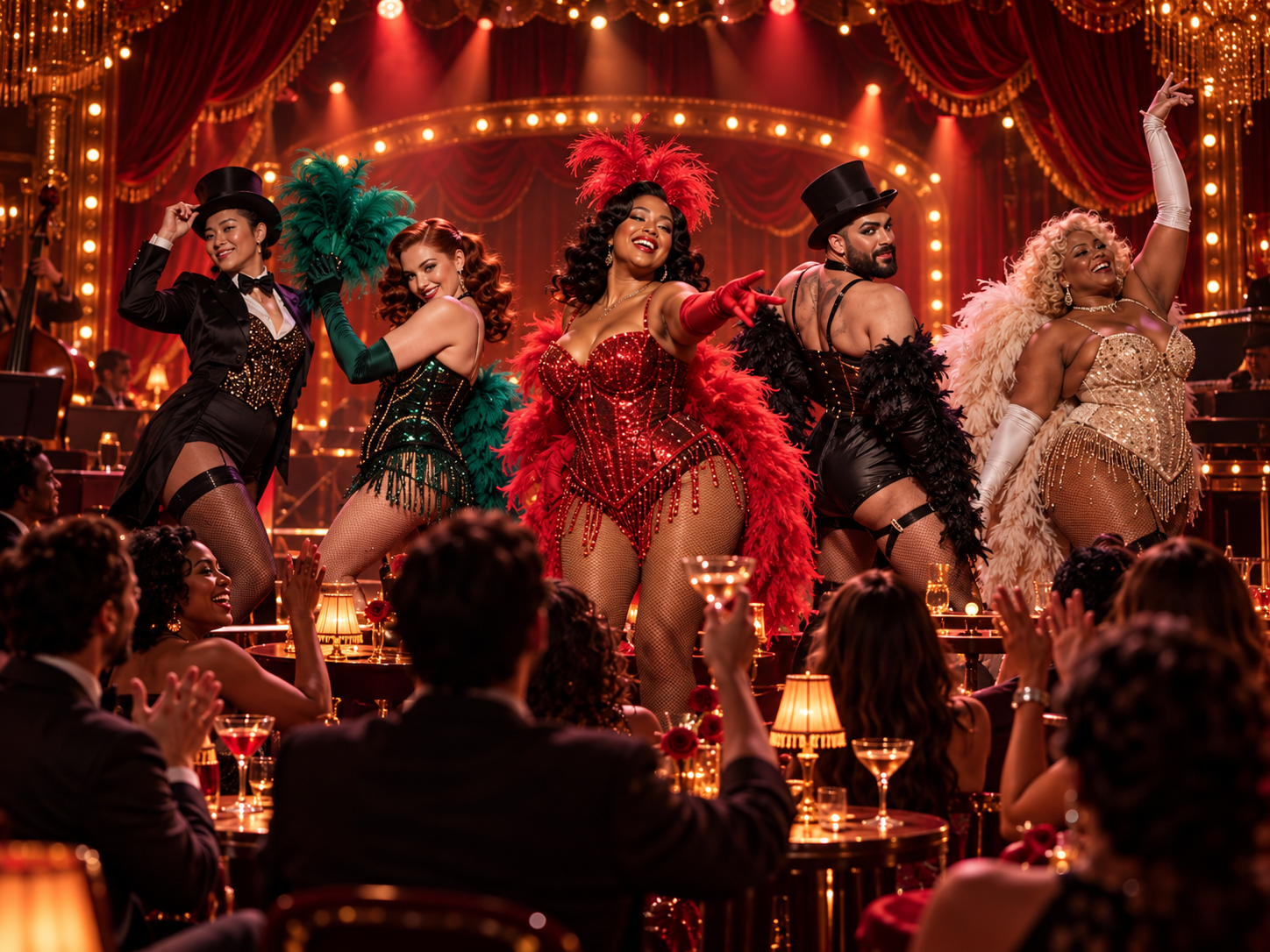
The strongest reveal is usually more than “one less garment.” It changes proportion, color, texture, movement or character. A cape can make the performer appear larger, then disappear to reveal a narrow silhouette. A skirt can hide leg line, then open the body to faster movement. A structured jacket can communicate authority before giving way to something softer, stranger or more exposed.
That visual change gives the audience a reason to feel that the act has moved forward.
Costume reveals can carry character and story
A reveal does not have to mean “more glamorous” or “more naked.” It can make the performer ridiculous, monstrous, vulnerable, powerful, gender-transformed, unexpectedly formal or deliberately ordinary. The reveal can contradict the first image.
That is where burlesque’s older relationship to parody and exaggeration becomes useful. A costume can set up one assumption and the act can dismantle it.
Why rehearsing the costume matters
Performance costumes need to be tested under the actual conditions of the act: movement, sweat, timing, music, shoes, floor surface, props and transitions. A reveal that works in a dressing room may fail when the performer is turning, kneeling, holding a fan or trying to hit a musical accent.
The point is not perfection for its own sake. Rehearsal makes the costume predictable enough that the performer can be spontaneous around it.
Where costume reveal fits in the larger craft
A garment can become a timing device in either a striptease sequence or a broader comic and theatrical burlesque act. The construction problem is similar—control what the audience sees and when—but the performance form is not defined by a mandatory amount of clothing removed. See burlesque vs. striptease when distinguishing the technique from the wider stage tradition.
Browse the connected craft articles in The Stagecraft Desk.
Costume reveal sits at the intersection of several burlesque skills: musicality, stage presence, act structure and tease and reveal. For sourcing and practical costume categories, use the Burlesque Costume, Props & Stagewear guide.
The important distinction is simple: the sourcing guide helps you find the objects. This feature explains what those objects can do once they are onstage.