The word “burlesque” did not begin as a synonym for stripping. Its older theatrical meaning was comic imitation: exaggerating or parodying an existing story, style or cultural form. Over time, American popular entertainment attached the same word to a very different kind of stage spectacle—one increasingly centered on the female body, revealing costume and striptease.
Burlesque originally meant parody
The Library of Congress describes the original meaning of burlesque as comedy that parodied its source. That could mean taking something culturally elevated or familiar and distorting it through exaggeration, comic reversal or theatrical irreverence.
This is why the history of burlesque begins in theater rather than in a dressing room. The essential idea was transformation: take something the audience recognizes and make it strange, comic, excessive or unruly.
Popular entertainment blurred the categories
By the turn of the twentieth century, American audiences encountered burlesque alongside vaudeville, dance, comic sketches, specialty acts and other variety-stage forms. The categories were related without being identical. Performers, producers, theaters and audiences moved through the same entertainment ecosystem.
The Library of Congress’s Variety Stage collection reflects that overlap: burlesque, dance, comedy and vaudeville appear as neighboring forms inside the same archive of popular stage entertainment.
The same word began describing body-centered entertainment
The Library of Congress notes that “burlesque” eventually came to describe “leg shows” and acts focused on women’s bodies, including scantily dressed performers and undressing. That change did not erase comedy, music or theatricality. Instead, another meaning accumulated around the old one.
This is one reason burlesque history can be confusing when reduced to a single definition. Depending on the period, a newspaper advertisement, theater program or audience member might use the word to mean comic parody, a variety-style stage entertainment, a chorus-centered spectacle or a striptease-focused show.
Striptease changed the center of gravity
As body-centered performance became more important to American burlesque, the mechanics of concealment and reveal became increasingly central to how audiences recognized the form. Costumes, gloves, stockings, fans and other removable elements turned the act of taking something off into a structured performance event.
The shift helps explain the modern confusion between burlesque and striptease. Striptease became such a visible part of burlesque that it could look like the whole form from the outside. But the older DNA—parody, exaggeration, character and audience awareness—never disappeared completely. See Burlesque vs. Striptease for the practical distinction.
Modern burlesque recombines the old meanings
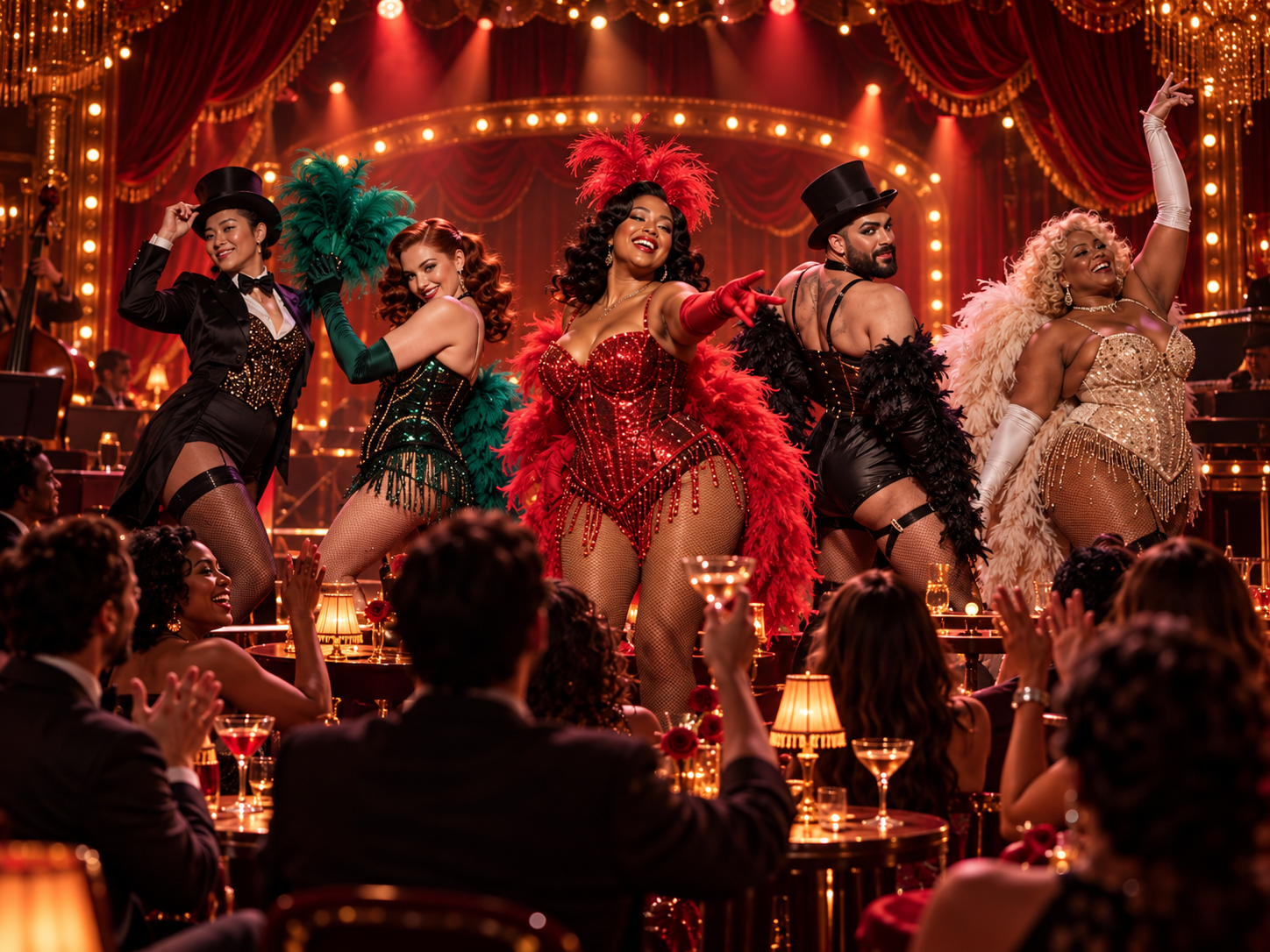
Contemporary burlesque can look backwards and forwards at the same time. Some performers preserve classic striptease vocabulary. Others foreground parody, politics, drag, fandom, circus, character or performance art. Neo-burlesque made that recombination especially visible by treating historical technique as material rather than a museum rulebook.
That is why “burlesque” now functions less like a single genre with one required move and more like a performance language. Tease, theatricality, exaggeration, transformation and direct awareness of the audience can appear in very different combinations.
The change was not a clean replacement
It is tempting to summarize the history as parody first, stripping later. That is directionally useful but too neat. Variety entertainment forms overlapped, and different versions of burlesque coexisted. The stronger historical picture is one of accumulation: the word kept picking up new associations as the commercial stage changed.
For the neighboring entertainment formats that shaped this transition, read Vaudeville, Revue and Burlesque. For the later revival, see What Is Neo-Burlesque?. For the broad chronology, use Burlesque History.