Vaudeville, revue and burlesque were not three names for the same show. They were neighboring forms inside the same larger world of American popular entertainment. They shared performers, theaters, visual language and audiences, while organizing the evening differently.
The variety stage was an ecosystem
The Library of Congress describes musical revue, burlesque and vaudeville as dominant forms of early-twentieth-century American entertainment. Thinking of them as an ecosystem is more useful than treating them as sealed genres. A singer, comic, dancer or specialty performer could work across different kinds of bills, while producers borrowed pacing, staging and spectacle from one another.
Vaudeville: the bill of separate acts
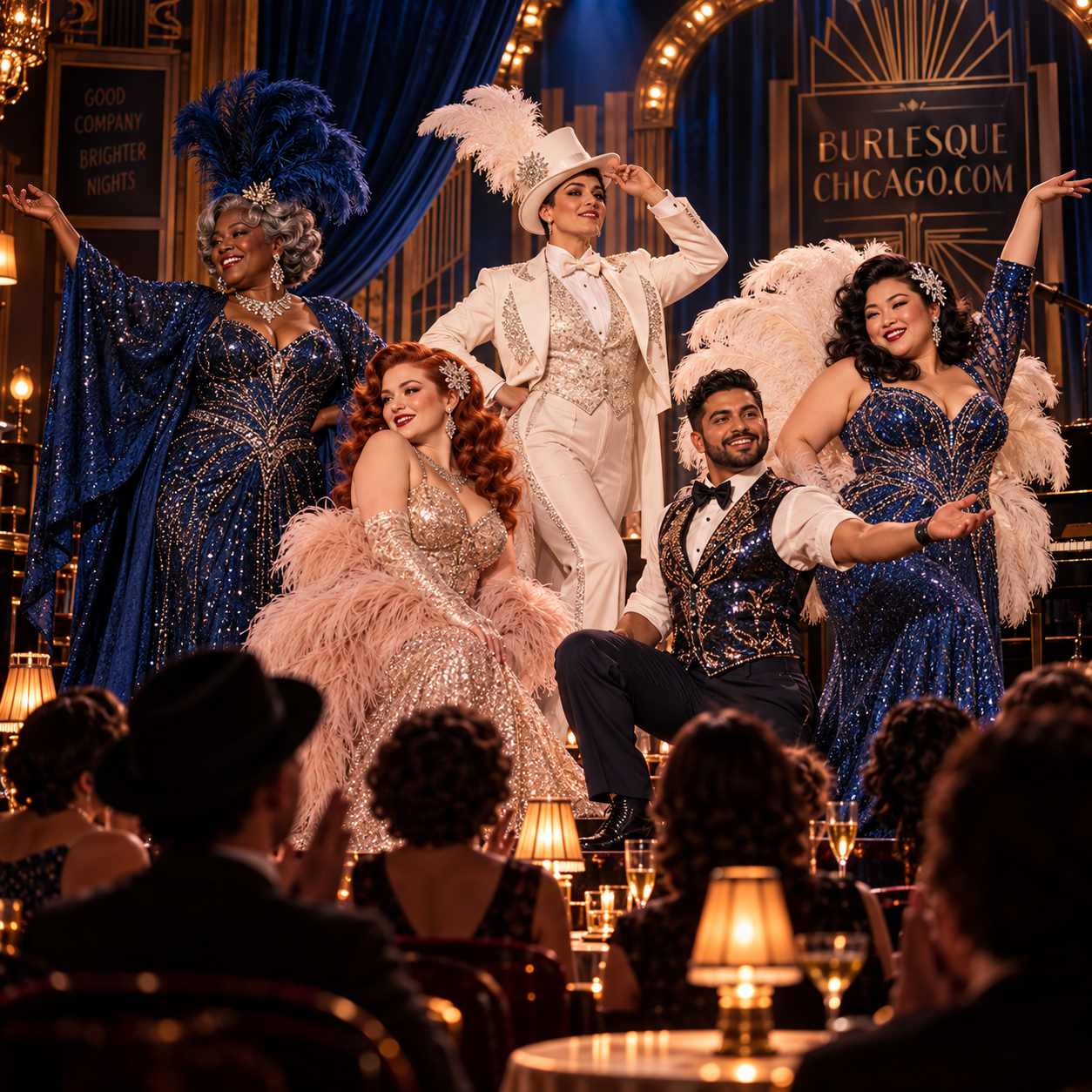
Classic vaudeville was organized as a sequence of distinct acts. Library of Congress material describes a standardized bill in which acts were deliberately arranged to build energy across the program. Comedy, music, acrobatics, dance, magic, animals and novelty specialties could all appear in one evening.
The important point is structural: the acts did not need to share characters or a story. Variety itself was the product. See Burlesque vs. Vaudeville for the narrower comparison.
Revue: separate numbers shaped into one theatrical program
A revue could still contain songs, dances, sketches and specialty numbers, but it was more likely to create a shared theme, visual concept or sequence across the evening. Library of Congress material on theatrical design points to the musical revue as an especially important home for elaborate scenic and costume design.
The Federal Theatre Project later demonstrated how flexible the boundary could be: some productions labeled vaudeville departed from strict sequential acts and became more like musical revues, with interrelated sequences and connecting themes.
Burlesque: parody, spectacle and eventually striptease
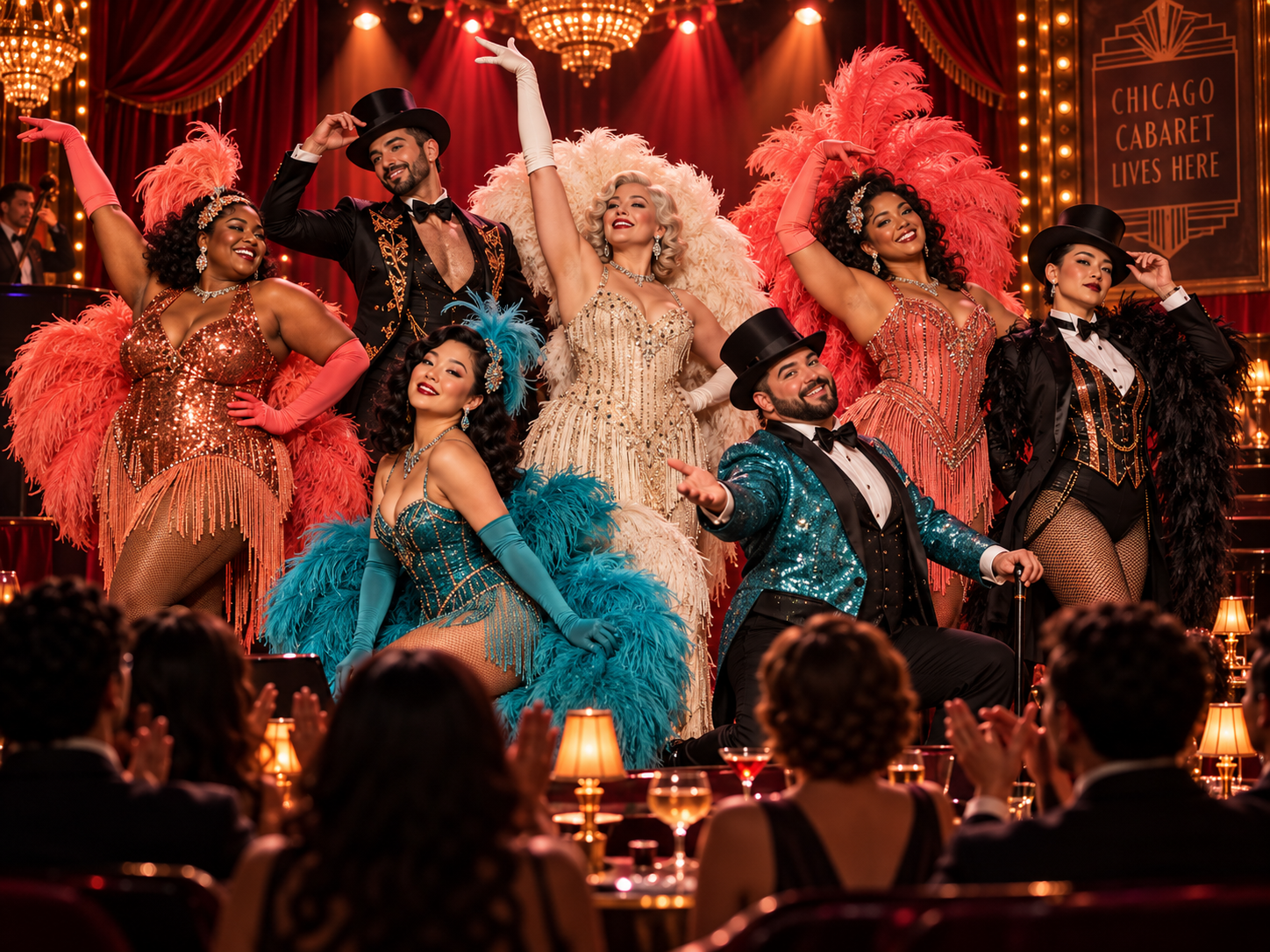
Burlesque occupied another neighboring lane. The Library of Congress records both its older meaning—comic parody—and its later association with body-centered entertainment and undressing. Depending on period and producer, a burlesque show could contain comedy, chorus work, music, specialty acts and striptease.
That makes burlesque unusually difficult to compare with vaudeville or revue using a single checklist. It was both a theatrical idea and a commercial stage tradition whose center of gravity changed over time. Read From Parody to Striptease for that transition.
Why audiences experienced overlap
From the audience perspective, all three forms could deliver music, comedy, dance, visual spectacle and specialty performance. The difference was often in how the evening was framed and organized rather than in whether a particular skill was allowed onstage.
A magician might appear on a vaudeville bill. A revue might use a comic specialty turn. A burlesque show could contain music and variety acts around its central stars. The borders were porous because the labor market, theater infrastructure and audience appetite were shared.

The forms changed as media changed
Vaudeville’s commercial dominance declined as motion pictures and radio transformed mass entertainment. Library of Congress material on the Federal Theatre Project describes vaudeville as already in eclipse during the 1930s, even while variety performers continued to work and the form’s structures survived inside other productions.
The important legacy is not that one form simply replaced another. Their techniques migrated. A modern variety bill can still present separate specialty acts; a revue can connect numbers with a shared design; burlesque can use parody, character, comic timing and reveal inside either structure. That is why identifying the actual audience experience is more useful than treating the three historical labels as rigid ticket categories. Modern cabaret, burlesque showcases, variety shows and immersive entertainment still use the old logic of contrast, sequencing, host transitions, visual spectacle and specialty acts.
How to recognize the difference today
- Vaudeville logic: many distinct acts; variety and sequencing are central.
- Revue logic: many numbers shaped into a more unified theatrical program or theme.
- Burlesque logic: tease, parody, theatricality, body, character and spectacle can combine in changing proportions.
- Cabaret logic: the relationship between performer, room and audience becomes central, whatever the exact act types.
For the next distinction, read Cabaret vs. Revue. For the full terminology map, browse the Burlesque Encyclopedia.