Buying burlesque show tickets is less about finding the absolute cheapest seat and more about understanding what the ticket actually includes. A low advertised price can mean standing room, general admission, partial view or a ticket that does not include dinner, drinks, table minimums or service charges. A more expensive option may include an assigned table, better sightline or a fuller evening.
Start with the all-in price
For live-event tickets in the United States, the Federal Trade Commission’s Rule on Unfair or Deceptive Fees requires sellers to disclose the total price up front rather than waiting until the end of checkout to reveal mandatory fees. Taxes and certain government charges may still be handled separately, but the advertised ticket price should not hide unavoidable seller fees.
That makes comparison easier, but you should still read the offer carefully. Two tickets with the same all-in price may represent very different experiences.
What does a burlesque ticket usually buy?
There is no universal burlesque ticket format. Depending on the producer and venue, your ticket may be:
- General admission — entry to the room, with seating first-come/first-served or standing.
- Assigned theater seating — a specific seat, row or section.
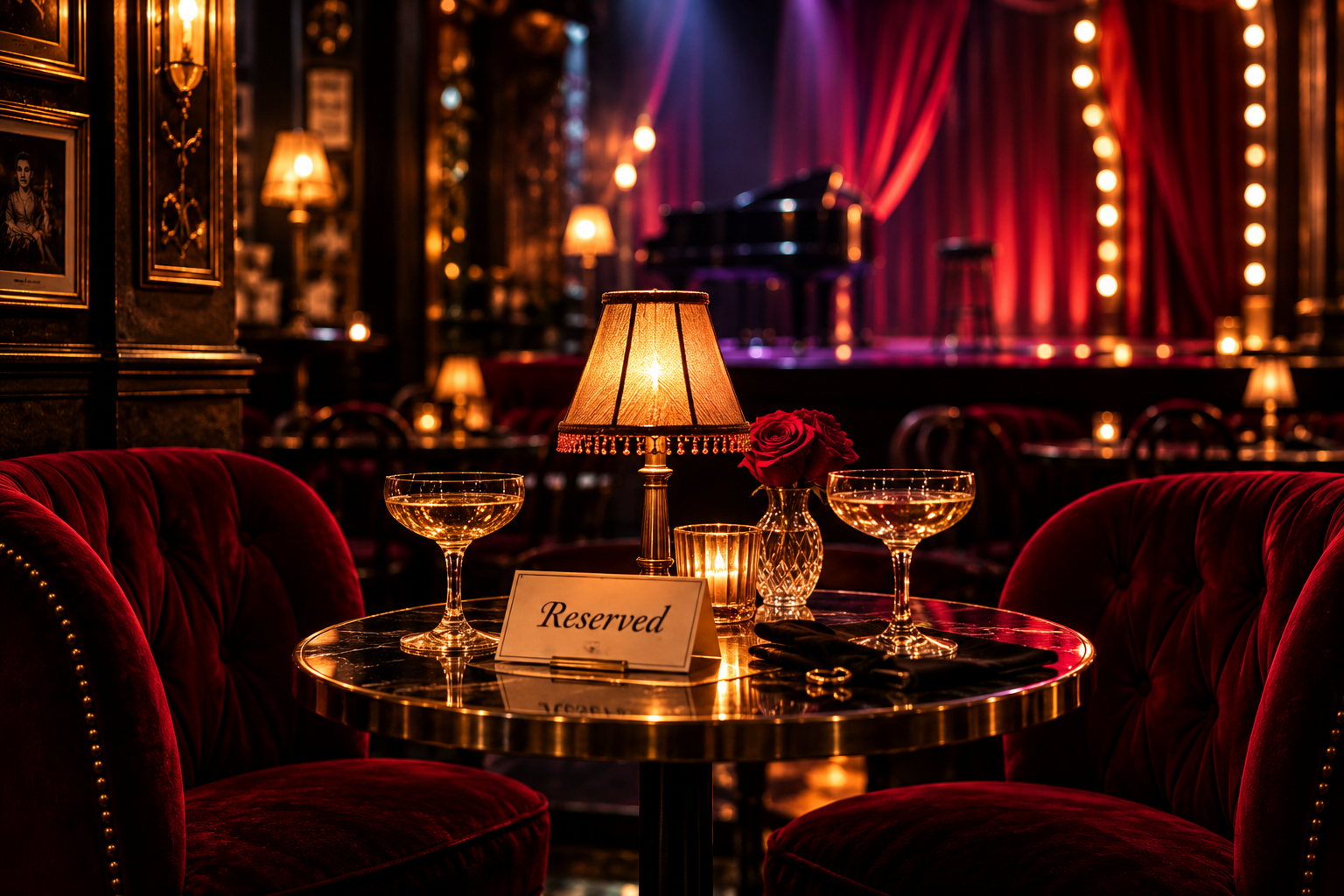
- Reserved cabaret table — a particular table or seating zone, sometimes sold by seat and sometimes by table.
- VIP / premium seating — closer sightlines, priority entry or another defined upgrade.
- Dinner-show admission — may include a meal, table service during the performance, or simply reserve your place in a room where food is sold separately.
Never assume “dinner show” means the meal is included. Our Chicago Dinner Shows guide explains the difference between dinner included in the ticket, table service during the show and separate nearby dining.
Cheap tickets are not automatically bad tickets
A lower-cost ticket can be an excellent choice when you care more about the performance than having a particular table. General admission, standing room, early shows, smaller productions and off-peak nights can all create lower price points without making the art itself “cheap.”
The useful question is: what are you giving up for the lower price? If the answer is simply a reserved table or a front-row seat, that may be completely fine. If the answer is obstructed sightlines, an unexpectedly large minimum spend or a ticket that covers less of the evening than you thought, it may not be the bargain it looked like.
Check doors time, showtime and late seating
Doors time is not the same as showtime. The gap may be when the venue seats guests, serves drinks or dinner, checks IDs, handles coat check or allows general-admission guests to choose seats.
If you arrive after the performance begins, some rooms may hold late seating until a transition. Read the ticket page or event confirmation before you go. For the broader timing question, see How Early Should You Arrive at a Burlesque Show?.
Look for age rules before buying
Burlesque is not one standardized level of explicitness, and venue rules vary. Some shows are 18+, some are 21+ because of the venue, and some productions may have different policies. Check the specific event rather than assuming every burlesque show follows the same age rule.
Read the refund and transfer policy
Live performance tickets are often final sale, but policies differ by producer and ticket platform. Before buying for a group, confirm whether tickets can be transferred, whether the purchaser must be present and what happens if the date changes or the performance is canceled.
If you are buying several seats, also check whether the platform will actually seat the group together or whether “general admission” simply guarantees entry.
Table minimums and food-and-beverage minimums are separate questions
A ticket may get you into the room while the venue separately requires a food-and-beverage minimum. That is common enough in nightlife that it is worth checking explicitly. A minimum spend is not automatically a hidden ticket fee if it is clearly disclosed, but it changes the true cost of the evening.
Before checkout, look for phrases such as minimum spend, two-drink minimum, food-and-beverage minimum, table minimum or service charge.
How to compare two burlesque tickets
- Total advertised price: what must you pay to obtain the ticket?
- Seat / table: assigned seat, reserved table, GA seat or standing?
- Sightline: is the section described as partial or obstructed view?
- Food and drinks: included, optional or subject to a minimum spend?
- Timing: doors, showtime, runtime and late-seating policy.
- Age rule: 18+, 21+ or another restriction?
- Refund / transfer: what happens if plans change?
- Source: are you buying from the producer/venue or from a resale listing?
Where should you buy burlesque show tickets?
Start with the official producer, venue or event page whenever possible. Burlesque Chicago helps you understand show formats and where to look, but current schedules, ticket inventory and policies belong to the presenter actually selling the event.
For Chicago options, begin with Best Burlesque Shows in Chicago or the broader Burlesque Shows Chicago guide. If you are visiting from out of town, use Chicago Burlesque for Visitors.
First show? Keep going
Choosing between front row, a cabaret table, theater seats and standing room? Read where to sit at a burlesque show before selecting a ticket tier.
Once the ticket is handled, the next useful questions are practical: when to arrive, what to wear, audience etiquette, tipping and photography. The full checklist lives in First-Timer Files.
Source note
The Federal Trade Commission’s Rule on Unfair or Deceptive Fees applies to live-event ticket sellers and requires upfront disclosure of the total price, excluding limited categories such as taxes or government charges. Ticket, venue, age, refund, seating and food-and-beverage policies still vary by individual event, so always verify the current presenter’s terms before purchase.