THE DRESSING ROOM · ARTIST BUSINESS
Make the producer see the act.
You already have the skill. Now make it easy for a creative producer to picture you changing an entire room.
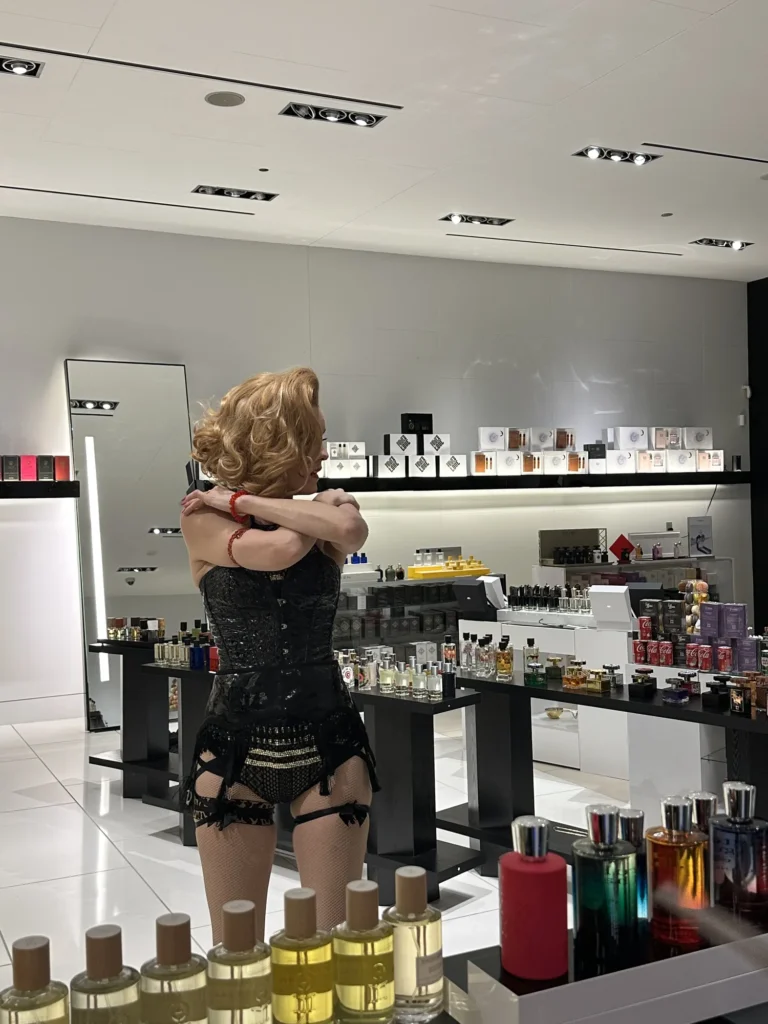

Owned performance reference from Red Hot Annie / Vaudezilla.
Your act is not a list of skills.
Producers need to understand what happens to the guests when you perform. A fire artist can be a striking finale, an atmospheric entrance or part of a larger story. A cabaret character might sing a featured number, welcome guests or stay in character through an entire cocktail hour. The same skill becomes more valuable when its role is clear.
The five things your introduction should answer
1. What’s the moment?
Describe the change in the room, not just your job title. Example: a silent character steals attention during guest arrival, then opens the main performance.
2. Can I see it?
Link one strong public reel or recent actual performance video. Put the best proof early. Identify clips that are concepts rather than filmed live acts.
3. How does it fit?
State runtime, audience proximity, strolling or stage format, reset time, capacity and the amount of rehearsal or creative adaptation you can support.
4. Can we produce it safely?
List the technical minimums, especially rigging, flame, floor clearance, power, sound, props, crew, insurance or permissions when relevant.
5. Can you travel?
Share your home base, geographic range, general availability and whether you quote travel separately.
6. Can I trust the process?
Professional communication, reliable invoices, rehearsal follow-through and clearly stated fee expectations make ambitious bookings possible.
A useful reel structure
Rather than sending five unlabelled links, create one short reel showcasing your best available footage, and a separate full-act video when it helps assess continuity or technique.
- Opening: lead with your strongest real performance moment.
- Middle: include range—your stage format, the audience reaction, your technical skill, and any guest-facing character interaction.
- Final seconds: identify your stage name and your best professional contact channel.
If you don’t have an expensive edit, an honest, well-lit phone recording showing a complete performance may be more useful than elaborate promotional artwork.
Copy this simple producer brief
Act or character: [Name] · Visual hook: [One sentence] · Best reel: [Public link] · Available formats: [Featured/roaming/ensemble] · Minimum space and sound: [Details] · Technical/safety: [Requirements and documentation] · Home base/travel: [Details] · Rehearsal availability: [Details] · Fee range: [Optional honest estimate].
Share only facts you can substantiate. A concept render can communicate tone, but never use an AI illustration as proof of a live performance you haven’t actually delivered.
What’s different about immersive work?
You may need to stay in character while guests interrupt you, adapt without losing an agreed cue, coordinate with technical staff, and protect the privacy and comfort of the audience. A beautiful act is the beginning; production awareness is what makes it repeatable.
See how to build an interactive character and the technical-readiness checklist.