Burlesque has more than one past.
Follow the form from parody and variety-stage entertainment through striptease, Chicago spectacle, neo-burlesque and contemporary performance. This desk organizes Burlesque Chicago’s researched history and cultural features without pretending every old image or story belongs to one simple timeline.
Start with Burlesque HistoryChicago HistoryOpen the Encyclopedia
Browse the timeline
- Burlesque History: Origins, Evolution & Modern Glamour — the broad chronology and the best starting point.
- From Parody to Striptease — how one word accumulated very different theatrical meanings.
- Vaudeville, Revue and Burlesque — how neighboring popular-entertainment forms shared performers, theaters and ideas.
- Sally Rand, the Fan Dance and Chicago’s 1933 World’s Fair — Chicago spectacle, tease and the cultural afterlife of the feather fans.
- What Is Neo-Burlesque? — the modern revival and reinvention.
- The Future of Burlesque — where the form may go next.
The Chicago shelf
Chicago is not just a location in this history. The city is part of the story: world’s-fair spectacle, cabaret and nightclub culture, independent theaters, contemporary performers and the constant mixing of entertainment forms.
- Why Chicago Is One of America’s Great Burlesque Cities — city history, culture and continuity.
- Sally Rand at A Century of Progress — one of the city’s most recognizable burlesque-history stories.
- Chicago Burlesque Guide — move from historical context into the living scene.
Forms that kept colliding
Burlesque history becomes easier to understand when you stop forcing every neighboring form into the same box. These guides separate the structures while showing where they overlap.
- Burlesque vs. Vaudeville — theatrical tradition versus variety-bill format.
- Cabaret vs. Revue — relationship with the room versus program structure.
- Burlesque vs. Cabaret — two overlapping but distinct performance traditions.
- Cabaret vs. Variety Show — presentation style versus mixed-act lineup.
- Burlesque vs. Striptease — the broader theatrical form versus one of its most famous techniques.
Objects, techniques and visual culture
History also lives in material things: fans, gloves, stockings, costume engineering, stage images and the techniques that taught audiences where to look.
- Feather Fan Dancing — how fans create concealment, reveal, scale and framing.
- Tease and Reveal — the performance logic beneath the costume changes.
- Costumes, Pasties, Tassels & Stagewear — practical material culture of performance.
- Costume Reveal as Stagecraft — how construction and removable layers control timing and attention.
- Feathers, Rhinestones and Light — how texture, reflection and silhouette behave under theatrical conditions.
- Burlesque Encyclopedia — terms such as glove peel, stocking peel, revue, stage kitten, musicality and more.
The revival and the living form
- Neo-Burlesque — how the late-twentieth-century revival reopened the form to new identities, aesthetics and subcultures.
- Burlesque Act Structure — the pacing, visual choices and reveal mechanics underneath changing aesthetics.
- The Future of Burlesque — the form as something still changing rather than a finished historical object.
- Backstage Chicago — the artists, makers and practical systems carrying the form forward now.
How the History Desk uses sources
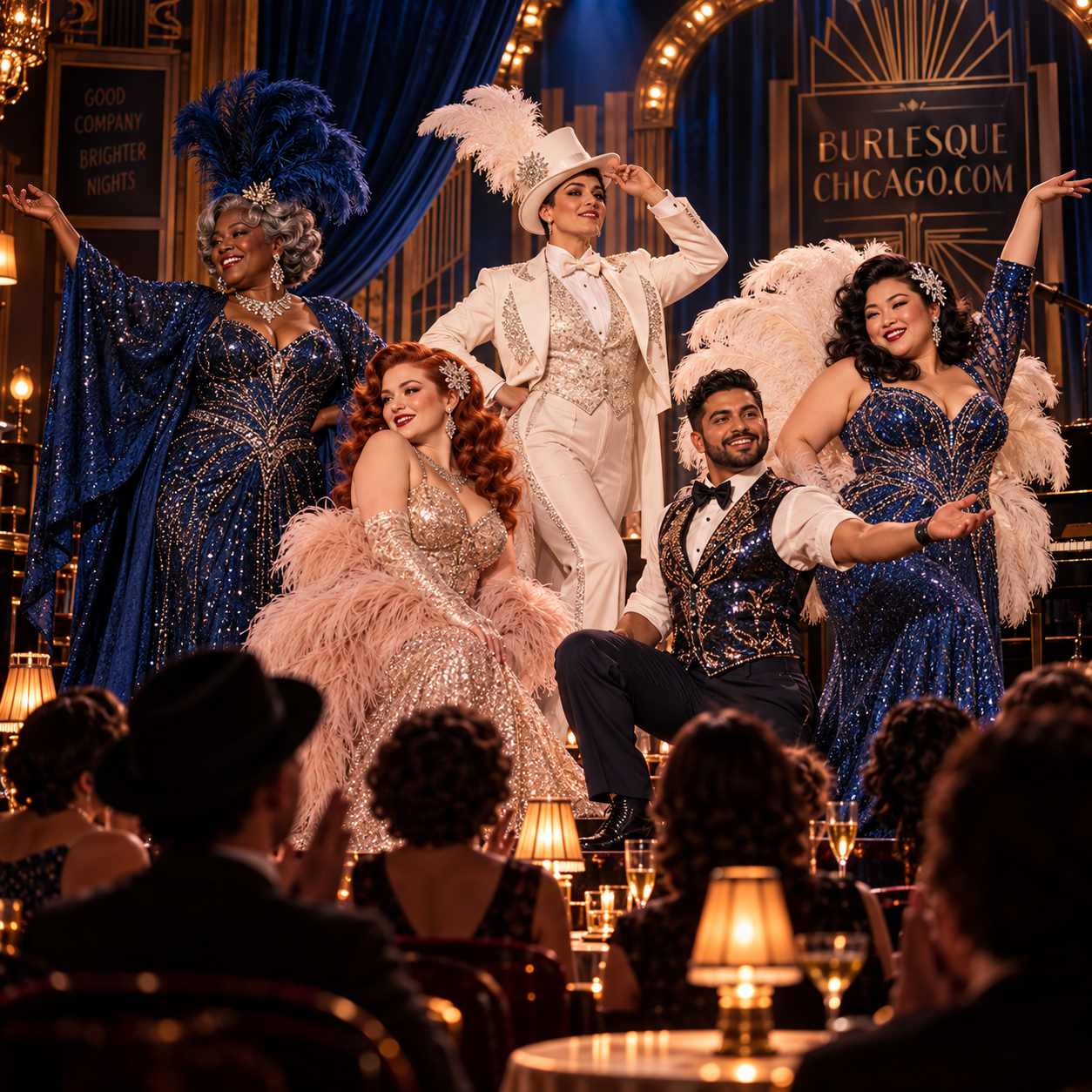
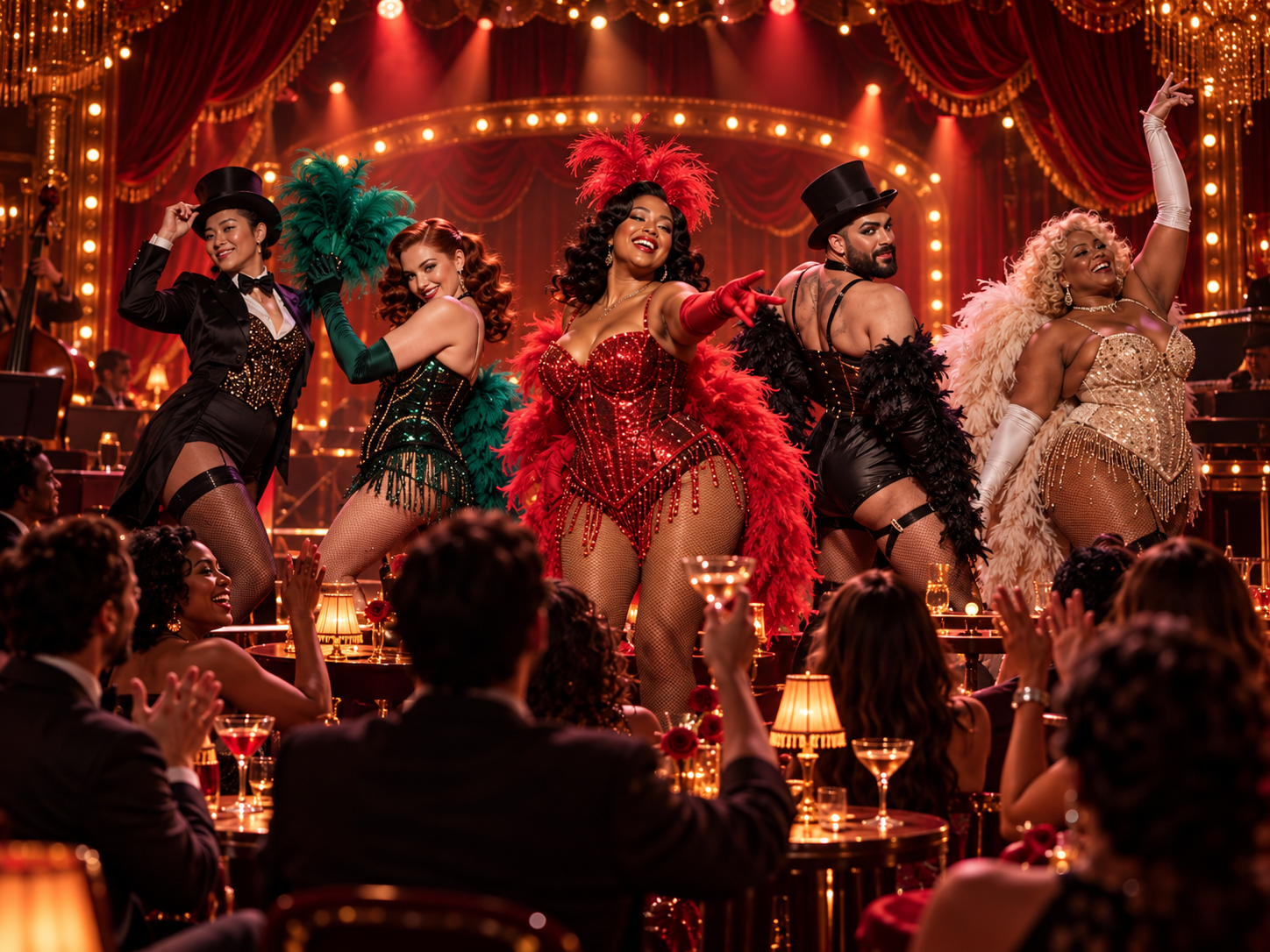
The History Desk separates historical evidence from contemporary editorial illustration. Museum, archive and institutional sources support historical claims. Burlesque Chicago’s own media library may be used to explain technique, atmosphere or continuity, but captions identify contemporary images so they are not mistaken for documentary photographs of historical people or events.
For the site’s broader sourcing, corrections and recommendation rules, read Editorial Standards. For the A–Z language of the form, use the Burlesque Encyclopedia.