How the room learns where to look.
Burlesque is not only costume, dance or reveal. It is the deliberate construction of attention: what the audience sees first, what changes, what waits, what catches the light and what finally lands. This desk gathers Burlesque Chicago’s writing on performance mechanics, visual culture and the design of an act.
A performer brings timing, judgment, presence and craft. The costume is only the visible layer.
Build the act
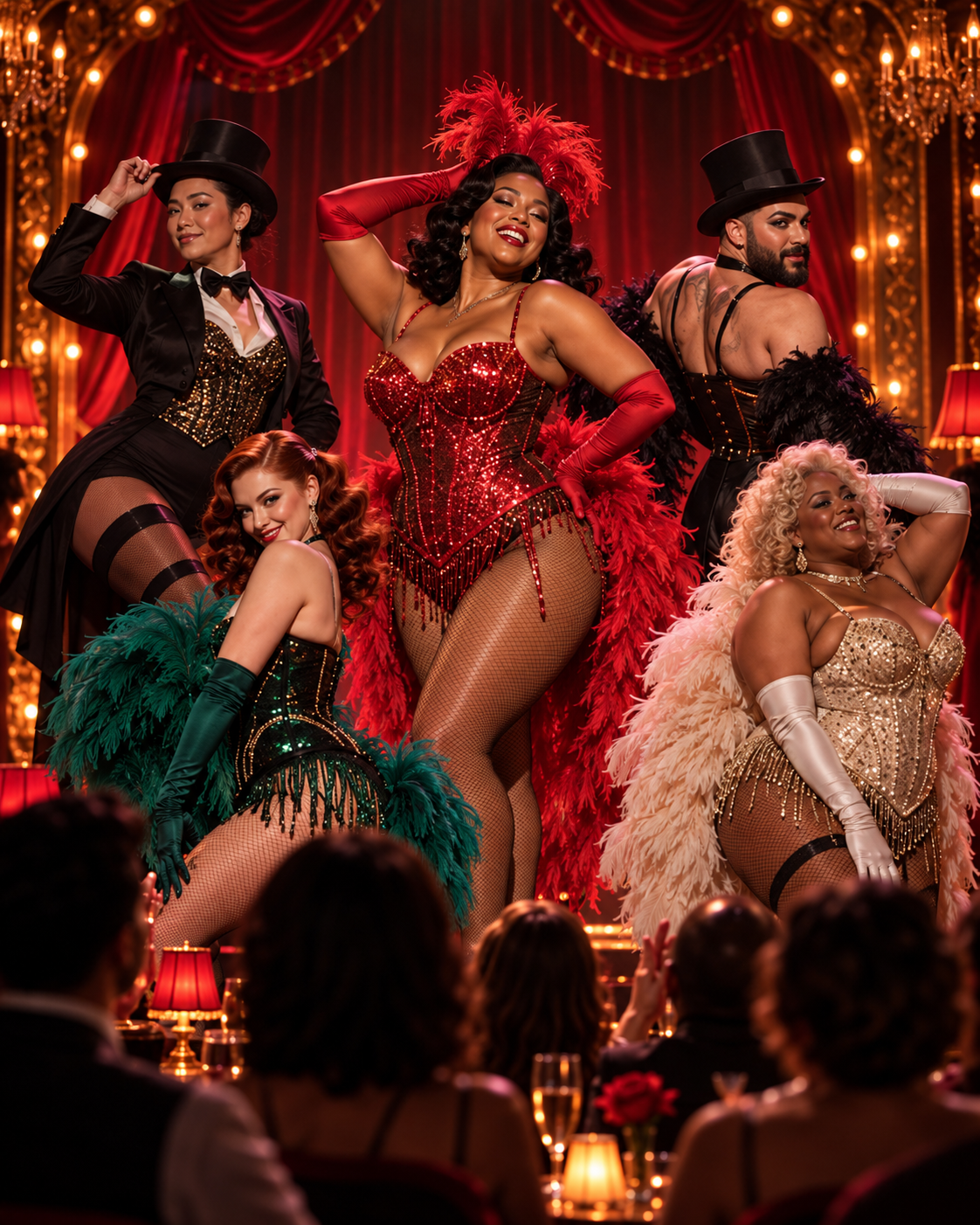
Before the rhinestones, props or reveals matter, the act needs a structure strong enough to organize attention. These pieces cover the core mechanics underneath different burlesque aesthetics.
- Burlesque Act Structure — how an act establishes an idea, develops it and moves toward a payoff.
- Burlesque Musicality — timing, phrasing, silence, accents and the relationship between movement and sound.
- Burlesque Stage Presence — directing attention without relying on volume or spectacle alone.
- Tease and Reveal — the timing, character and reveal choices behind the act.
Control anticipation
Tease is not a garment category. It is a timing system. A performer can create anticipation with distance, gaze, music, repetition, comedy, stillness, props or costume. The reveal matters because the room has been taught to care about it.
- Tease and Reveal — expectation, delay and payoff.
- Costume Quick Changes — fasteners, backstage layout and rehearsal.
- The Stage Manager — cues, readiness and show flow.
- Sound and Lighting Cues — how a performance directs attention.
- Running Order — how the whole evening is assembled.
- Costume Reveal as Stagecraft — how removable layers and construction become part of choreography.
- Burlesque vs. Striptease — why reveal technique and the larger theatrical form are related but not identical.
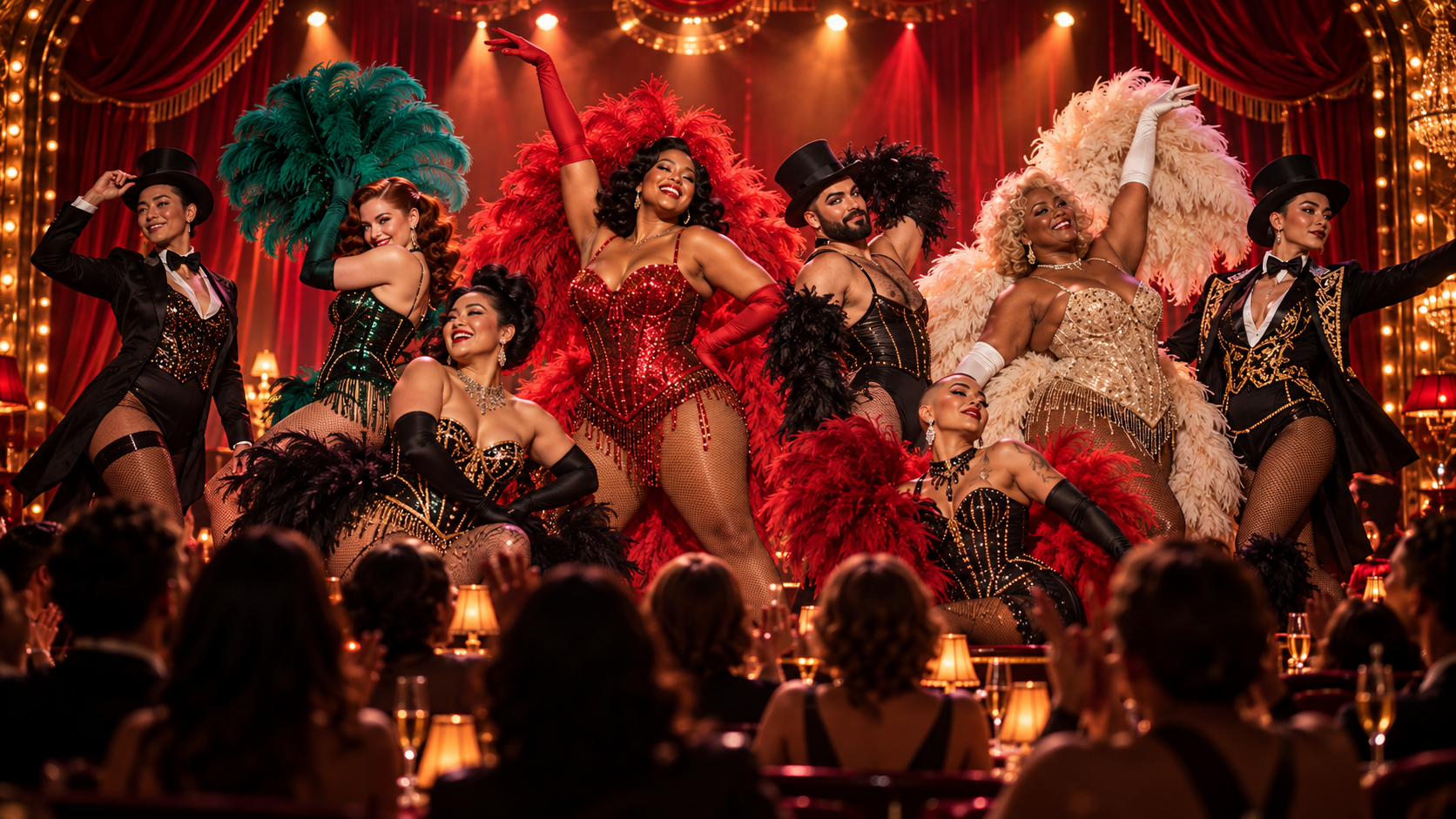
How a show teaches the audience where to look.
Costume silhouette, pacing and the audience’s relationship to the room form a vocabulary. These are editorial explorations, not practical instruction.
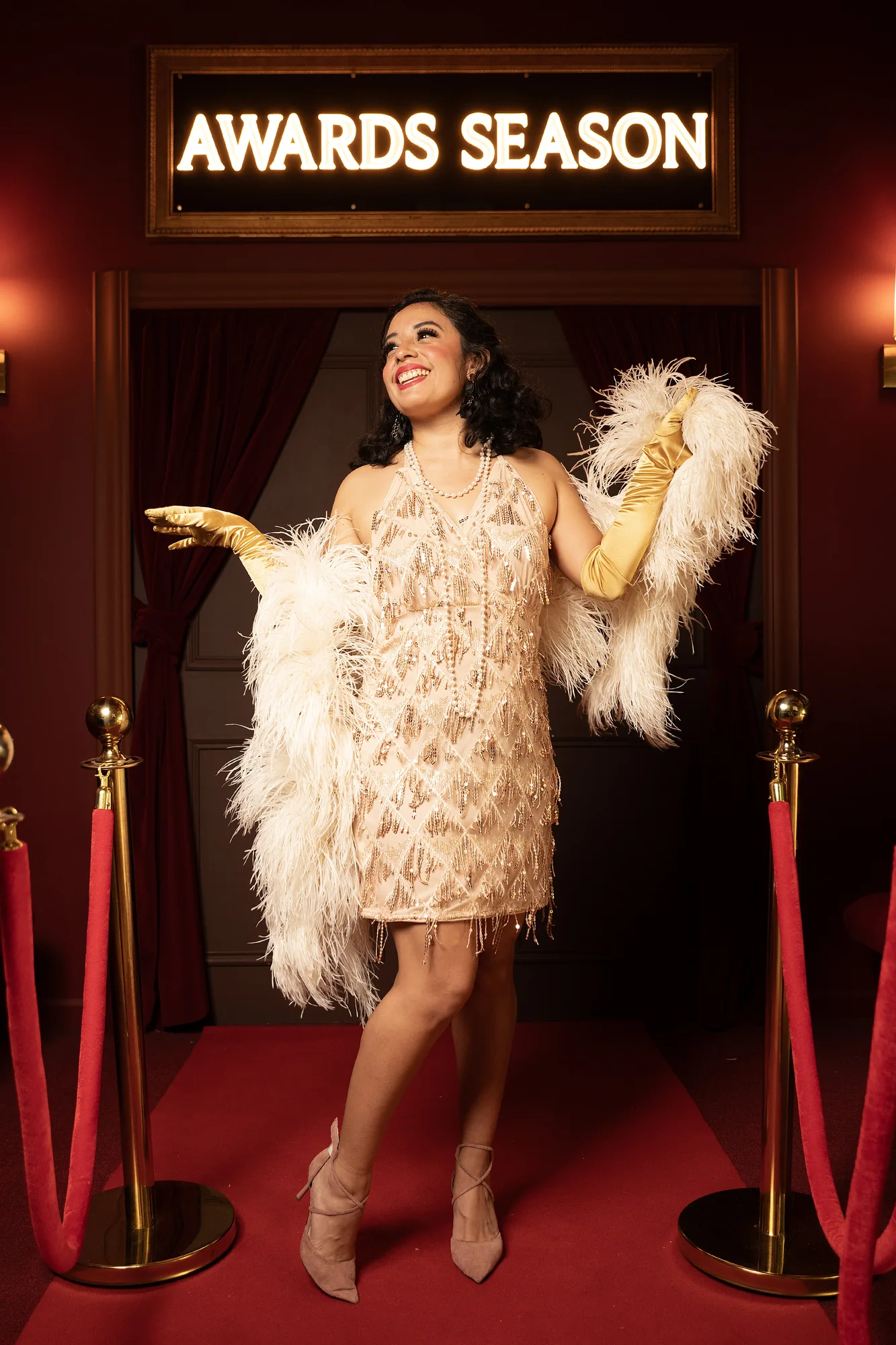 Costume and lightWhy materials and silhouette change what audiences see.
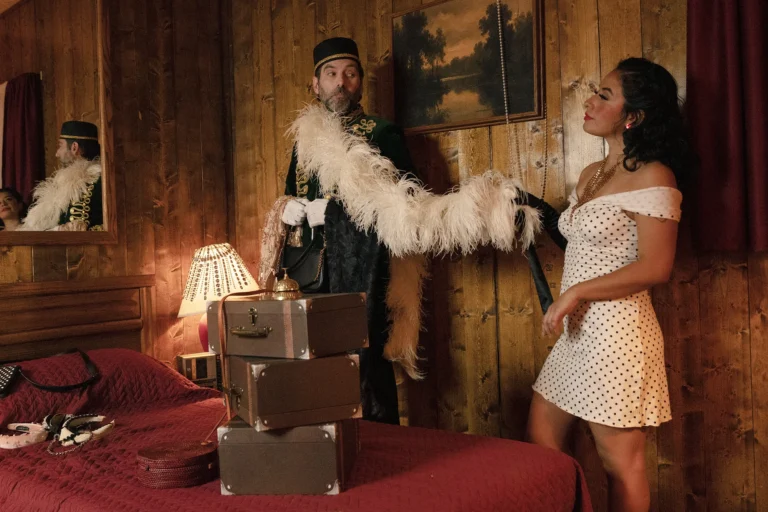 The revealHow pacing and visual design build anticipation.
 The audienceWhy the relationship with the room matters.
Red Hot Annie owns hands-on classes and private coaching. Vaudezilla owns professional productions.
Design the visual picture
Costume, prop, silhouette and light are not separate decorative departments once the act begins. They combine into one moving picture. A useful question is not “Is this costume beautiful?” but “What does this visual element make the audience notice, and when?”
- Feathers, Rhinestones and Light — why texture, reflection, silhouette and theatrical light change how costume reads from the room.
- Feather Fan Dancing — fans as moving screens, framing devices and extensions of silhouette.
- Costumes, Props & Stagewear — practical sourcing and performance-ready materials.
- Burlesque Encyclopedia — terms such as peel, reveal, stage kitten, fan dance, tassel twirling and revue.
The audience is part of the mechanism
A technically perfect reveal can still feel empty if the room is not with the performer. Burlesque depends on an unusually visible feedback loop between stage and audience: attention changes timing, laughter changes pacing, applause can extend a beat and silence can become part of the tension.
- A Good Audience Changes the Show — attention as part of live performance.
- Why Intimate Rooms Make Performances Feel Bigger — proximity, focus and scale.
- What Makes a Great Cabaret Host? — transitions, tone and keeping the room available to the performers.
From visual design to production readiness
Want to see how the whole night fits together? Read the anatomy of a complete burlesque program, then follow the stage-manager cue chain. These articles focus on the production decisions behind a show, rather than repeating the definition of an individual burlesque act.
Stagecraft also has a practical side. Props need places to land. Costume pieces need to clear the performer’s feet. Fire and aerial acts need technical conditions. A beautiful idea becomes usable only when the physical production can support it.
- Backstage Chicago — performers, makers and practical production resources.
- Fire & Aerial Technical Rider Checklist — one technical example of turning an act into a safe, bookable production element.
- How to Pitch an Act to Immersive Event Producers — translating an artistic act into usable production information.
Where this desk stops
The Stagecraft Desk is editorial: it explains how performance elements work and how they relate. It is not a substitute for hands-on training, rehearsal or a qualified technical professional. Readers looking to learn burlesque in practice can continue to Red Hot Annie; private and corporate event production belongs with Vaudezilla.
For the historical shelf behind many of these techniques, browse The History Desk. For terms and definitions, use the Burlesque Encyclopedia.